Start With the Right Questions
These answers explain the factors that shape a court project, but they do not replace a site evaluation. Property conditions, current requirements, and the intended level of play determine the final design and scope.
Cost and Scheduling
How much does a custom court cost?
The final investment depends on sport, dimensions, demolition or site preparation, base requirements, drainage, access, surface system, fencing, lighting, equipment, and custom graphics. Current starting points are $15,000+ for pickleball, $18,000+ for basketball, $25,000+ for multi-sport, $35,000+ for tennis, and $40,000+ for commercial work. A site consultation is required for project-specific pricing.
How long does it take to build a court?
Many residential projects are planned within a two-to-eight-week construction range, depending on court type and scope. More complex commercial projects may require six to sixteen weeks. Weather, access, engineering, approvals, and concrete or coating cure time can extend the schedule.
Do you offer court financing?
Financing options are available for qualifying projects. The financing page explains the current application path, and the project scope still needs to be established before final funding and construction decisions are made.
Property and Construction Planning
How much space do I need for a backyard court?
The required footprint depends on the sport, desired play clearances, whether the design is full or partial court, and surrounding features. Fencing, equipment, slopes, drainage, utilities, setbacks, and access also affect the usable area. We confirm the practical footprint during site planning rather than relying on a single universal dimension.
How are drainage and the court base handled?
The base and drainage are fundamental to surface performance. We evaluate grade, water movement, soil and existing conditions, edge relationships, and the intended surface system. The resulting scope may include engineered base work, proper slope, drainage coordination, and surface preparation appropriate to the site.
Do I need permits or HOA approval?
Requirements vary by municipality, property, project scope, easements, utilities, and neighborhood. Owners should confirm current city and HOA requirements before construction. For commercial work, engineering, accessibility, and permitting coordination may be part of the project scope.
Can a court be coordinated with a pool or full backyard project?
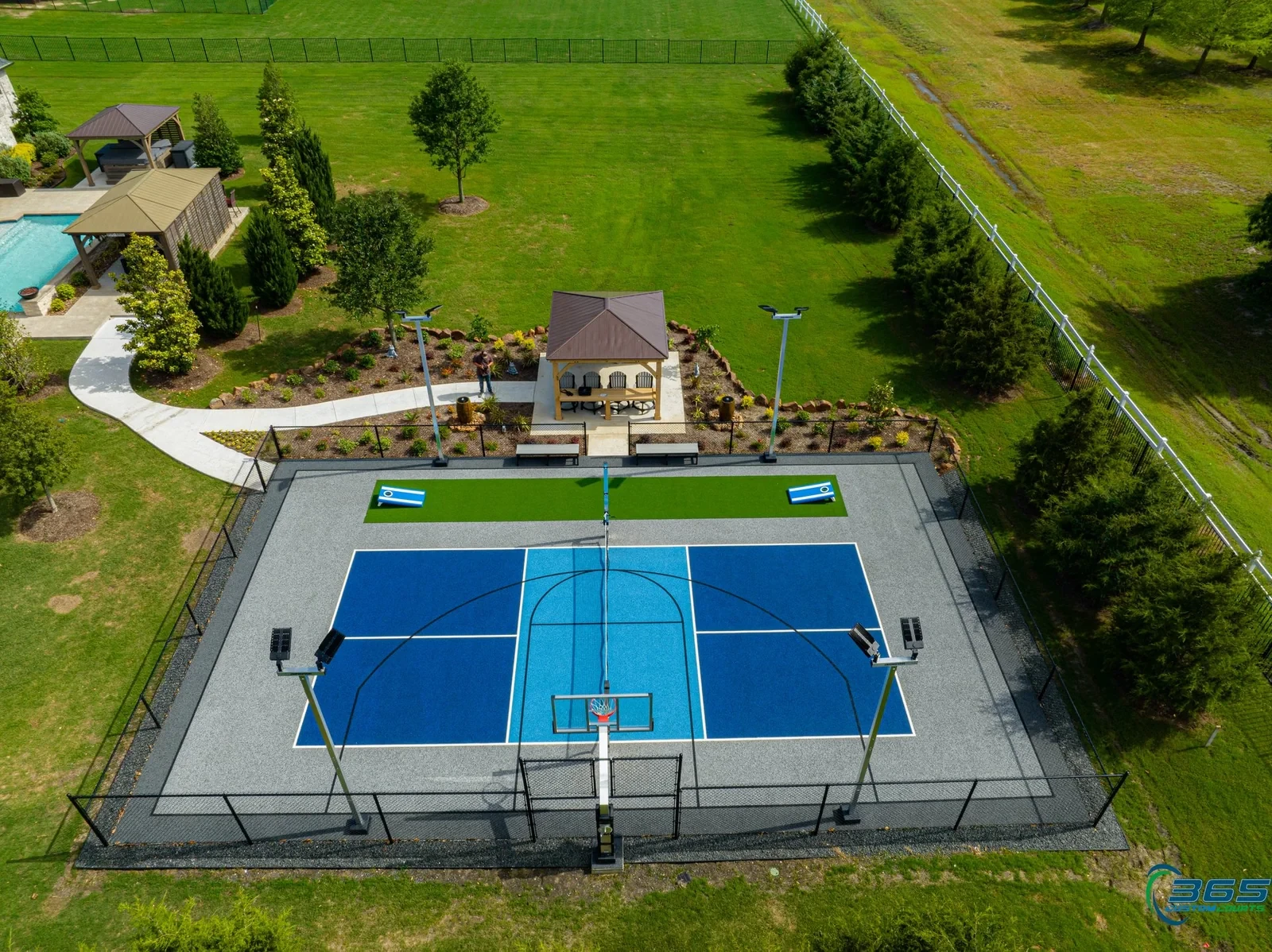
Yes. Court position, access, grading, drainage, fencing, lighting, landscape, pool decks, turf, and gathering areas can be considered together. For broader outdoor transformations, 365 Custom Courts can coordinate the court portion alongside Curate Construction planning.
Surfaces, Equipment, and Maintenance
What is the difference between acrylic and rubber court surfaces?
Acrylic systems are designed for consistent ball response, traction, color durability, and familiar court play. Cushioned or rubber-based options can add shock absorption and comfort. The right system depends on the sport, base condition, player preferences, drainage, use level, and maintenance expectations.
Can I add custom colors, lines, or a logo?
Yes. Courts can incorporate approved color combinations, sport-specific or multi-sport line layouts, and custom graphics. The design should keep play lines readable and equipment positions clear, so visual customization is coordinated with court function.
Can lighting, fencing, windscreens, nets, and hoops be included?
Yes. Available project options include LED lighting, perimeter fencing, privacy or windscreen systems, net posts and nets, basketball hoop packages, and removable equipment. Placement and specifications depend on the court, property, intended use, and applicable approvals.
How often does a court need maintenance or resurfacing?
Maintenance frequency varies with surface system, drainage, shade, weather exposure, use, surrounding vegetation, and base movement. Routine cleaning and prompt attention to drainage or cracking can help protect the surface. Existing courts should be inspected before a resurfacing recommendation is made.
Residential and Commercial Projects
What is the difference between residential and commercial court construction?
Residential work is usually planned around a private property, household use, outdoor living, and a specific owner’s preferences. Commercial projects often add higher daily use, accessibility, engineering, procurement, stakeholder coordination, permitting, and more durable perimeter or equipment requirements.
Can one court support multiple sports?
Yes. Multi-sport courts can combine activities such as basketball, pickleball, and tennis through coordinated line colors, net systems, hoop placement, and shared clearances. The layout should prioritize the sports that will be played most often and remain visually understandable.
Still Have Questions?
Tell us what you want to build and where the property is located. We’ll help identify the information needed for the next planning step.
Get In Touch